Miami Hard Water: What It’s Doing to Your Fixtures, Glass, and Shower Doors
Hard water is Miami’s #2 cleaning challenge. The Prime Cleaner explains how it damages fixtures and glass, what removes it, and how to prevent permanent staining.
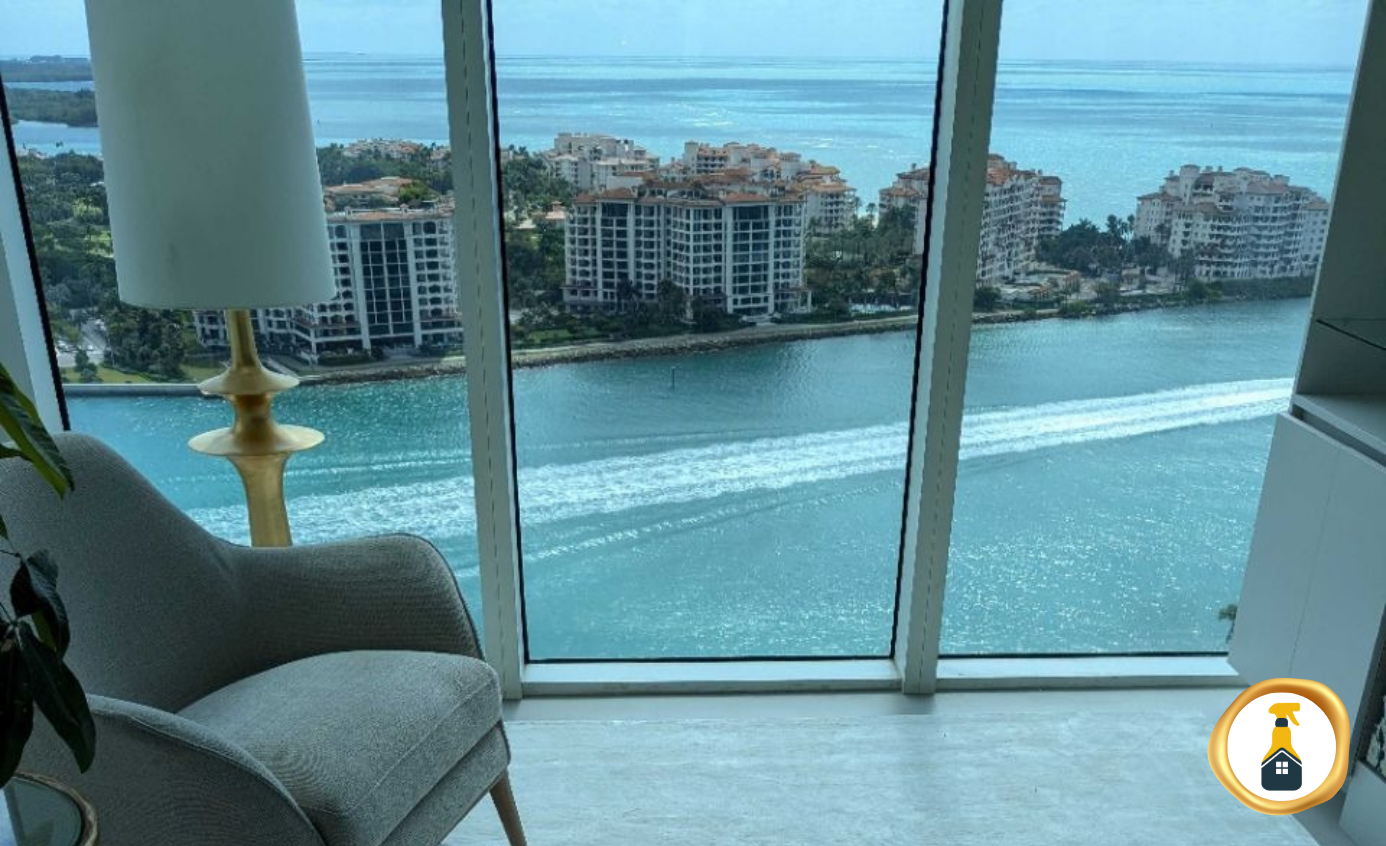
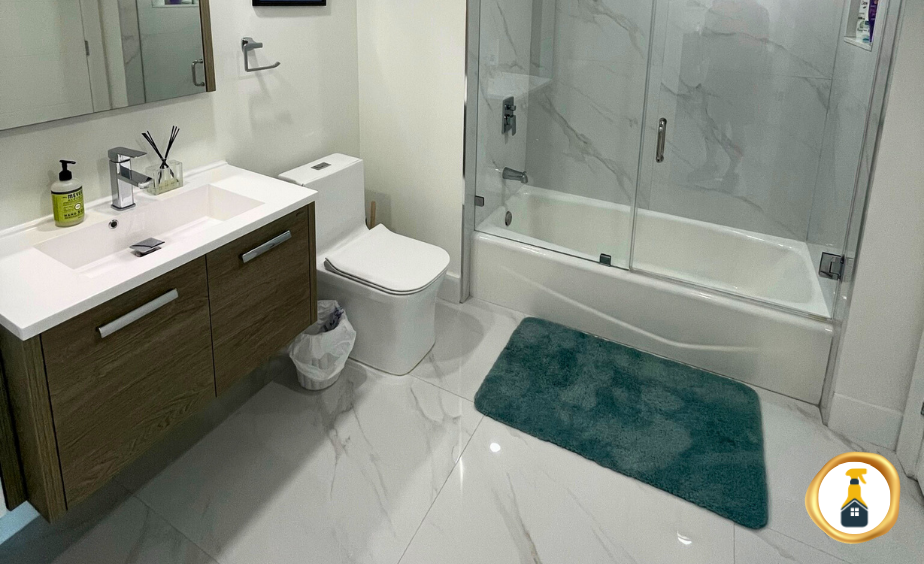
Hard water is the second biggest cleaning challenge in Miami homes, ranking right behind construction dust based on what we see across 10,000 plus cleanings. Miami’s water supply contains high concentrations of calcium and magnesium that leave deposits on every surface the water touches. Glass shower doors cloud over. Fixtures develop white crusty buildup. Faucet bases accumulate rings of mineral residue. Tile surfaces in bathrooms and kitchens lose their shine under a dull mineral haze.
If you’ve been fighting losing battles with your shower glass or watching your fixtures deteriorate despite regular cleaning, hard water is almost certainly the cause, and the standard approach most people take doesn’t actually solve the problem.
What Hard Water Does to Your Home
Hard water deposits are cumulative. Each exposure adds a microscopic layer of mineral residue to the surface. Water hits your shower door, evaporates, and leaves behind calcium and magnesium. The next shower adds another layer. Within weeks, the glass has a visible film. Within months, the film becomes a cloudy obstruction. Within a year or more of untreated accumulation, the minerals can actually etch the glass surface, creating permanent damage that no amount of cleaning can reverse.
Fixtures follow the same pattern but with different visual effects. Chrome faucets develop white spots that dull the reflective surface. Brushed nickel fixtures show crusty buildup around the base and on the spout. Shower heads gradually clog as mineral deposits accumulate inside the nozzles, reducing water pressure and creating uneven spray patterns.
Tile and grout are particularly vulnerable because grout is porous and absorbs mineral-laden water. Over time, grout lines in showers and around tubs take on a white or yellowish discoloration that looks like poor cleaning but is actually mineral infiltration. Regular scrubbing with standard products moves the surface deposits around but doesn’t dissolve the underlying mineral layer.
Why Standard Products Don’t Work
Most all-purpose cleaning products are pH-neutral or slightly alkaline. Hard water deposits are mineral-based and require acidity to dissolve. Spraying a neutral cleaner on mineral buildup and wiping is like trying to dissolve sugar with oil. The chemistry doesn’t work.
This is why people clean their shower doors weekly with standard products and the glass stays cloudy. They’re removing surface dirt and soap residue but not touching the mineral layer underneath. The glass looks slightly better immediately after cleaning but returns to the same cloudy state as soon as it dries.
What Actually Works
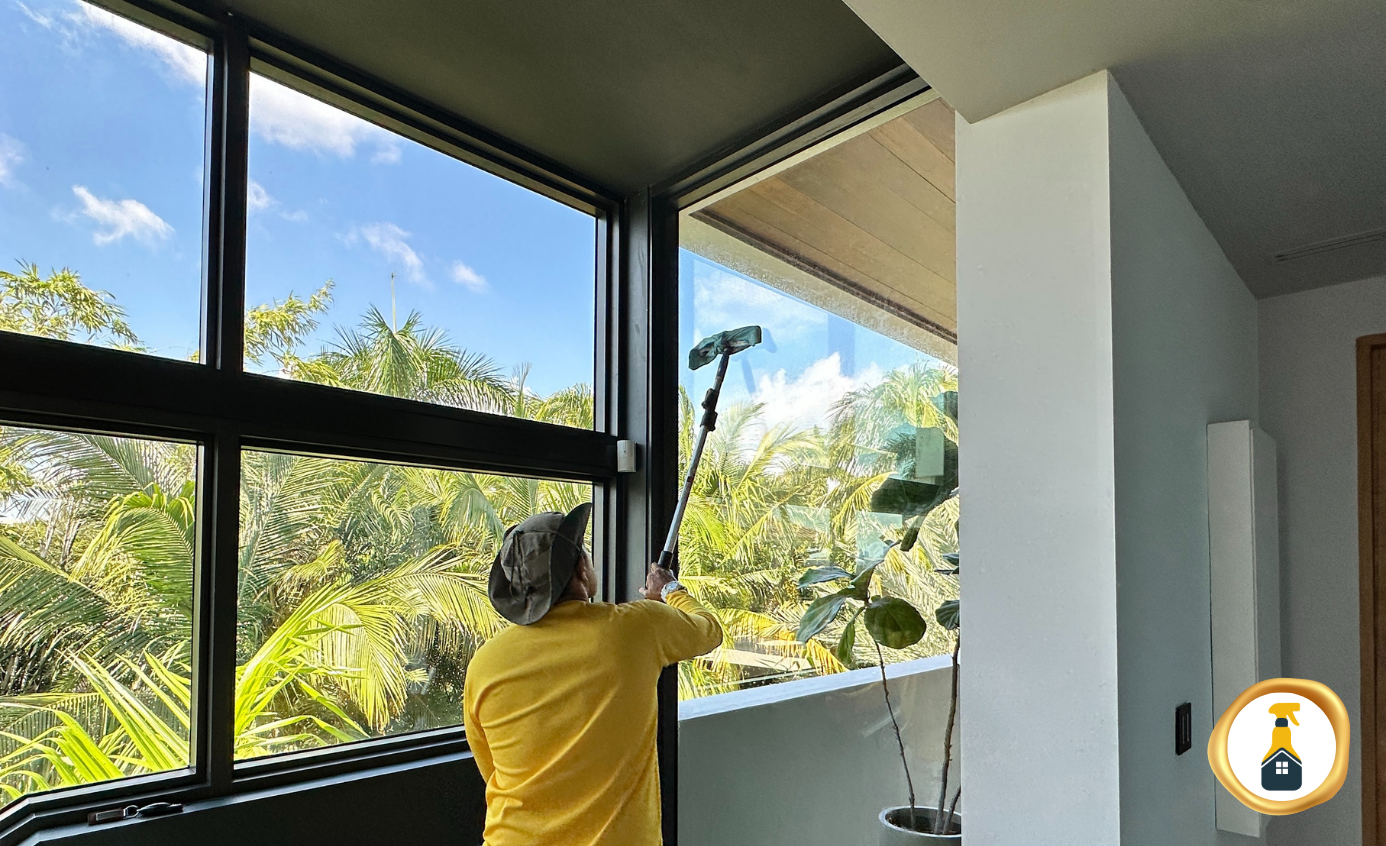
Vinegar is one of the most effective solutions for hard water deposits, which is why it’s a core part of our cleaning approach at The Prime Cleaner. The acetic acid in vinegar dissolves calcium and magnesium deposits on contact. Applied to glass, allowed to dwell for several minutes, and then wiped clean, vinegar cuts through the mineral film that neutral products can’t touch.
For severe buildup, we use more concentrated applications with longer dwell times. Baking soda paste applied after the vinegar treatment provides mild abrasive action that helps lift stubborn deposits without scratching the underlying surface. The combination of acid dissolution from vinegar and gentle abrasion from baking soda addresses hard water deposits more effectively than any single commercial product we’ve tested.
For ongoing prevention, regular cleaning is the key. Hard water deposits that are removed weekly never get the chance to build to problematic levels. Deposits that are left for months require increasingly aggressive treatment to remove. At The Prime Cleaner, our biweekly cleaning schedule includes attention to hard water surfaces at every visit, preventing the accumulation cycle that leads to permanent damage.
Protecting Your Shower Glass
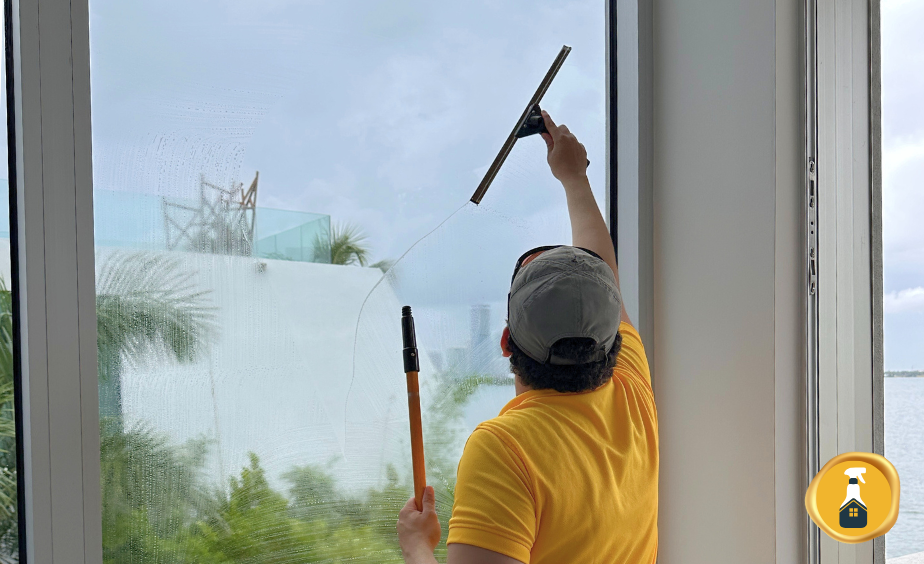
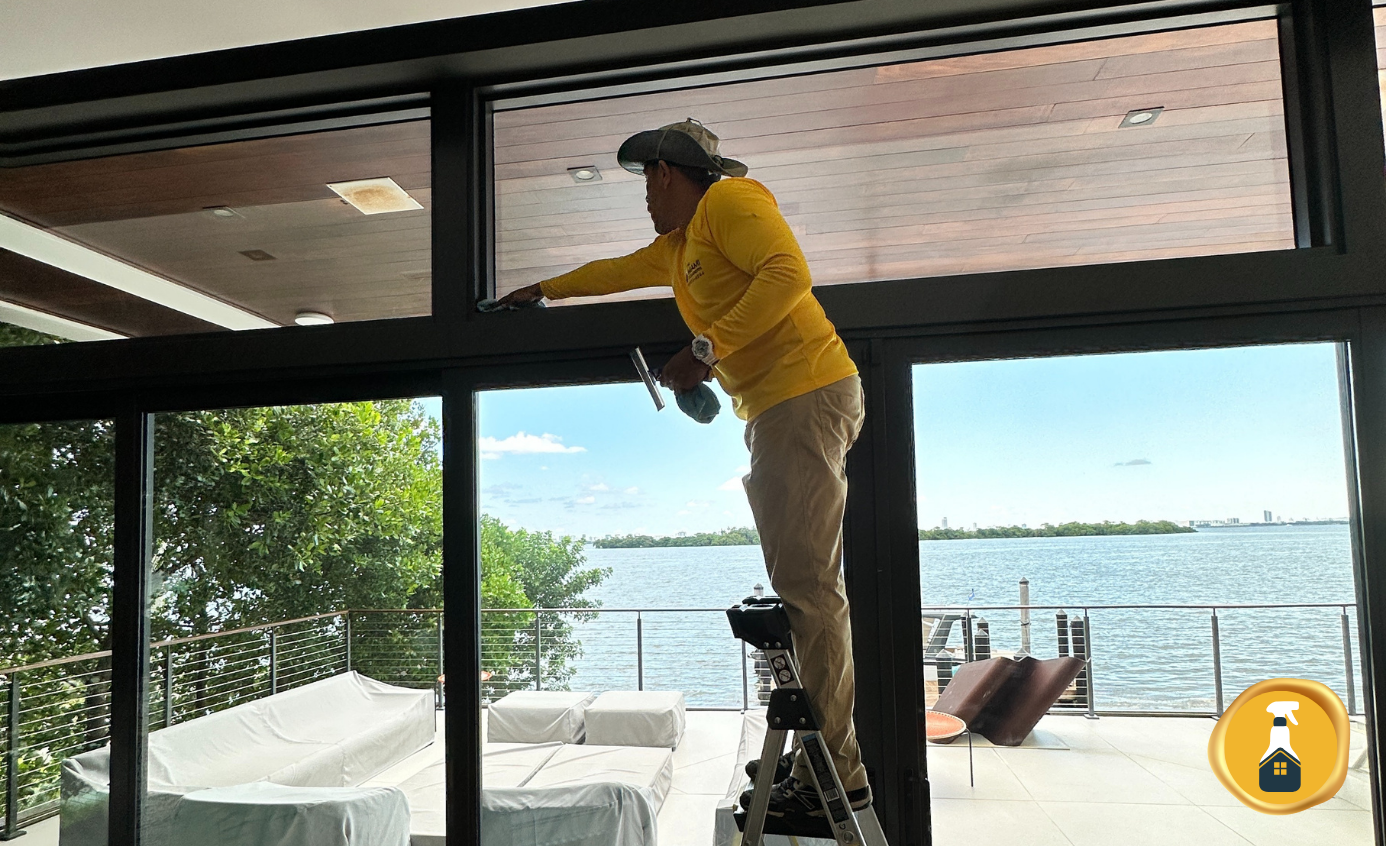
Your glass shower door is the most visible victim of Miami’s hard water, and protecting it requires consistent attention. After every shower, squeegeeing the glass removes the standing water that deposits minerals as it evaporates. This single habit, which takes less than 30 seconds, prevents more hard water damage than any product you can buy.
Between professional cleanings, a weekly spray of diluted vinegar on your shower glass helps manage buildup. Spray, let it sit for a few minutes, then rinse. This maintenance between our visits keeps your glass in better condition and makes our biweekly cleaning more effective.
If your shower glass has severe existing buildup, our deep cleaning service starting at $420 includes focused hard water treatment as part of the comprehensive scope. In some cases, multiple sessions may be needed for severely etched glass, though we’re honest about the limits: glass that has been permanently etched by years of mineral contact may not fully restore to its original clarity.
Protecting Your Fixtures
Fixtures benefit from the same preventive approach: regular attention before deposits become severe. Our team treats fixture surfaces with appropriate products at every visit, maintaining the finish and preventing the crusty buildup that eventually becomes difficult to remove.
For fixture bases where water pools and evaporates repeatedly, drying after use prevents deposit formation. The ring of buildup around faucet bases is caused entirely by standing water that evaporates and leaves minerals behind. Wiping the base dry after washing your hands takes seconds and prevents the problem entirely.
Frequently Asked Questions
Can hard water permanently damage glass? Yes. Over time, mineral deposits etch the glass surface, creating damage that no cleaning can reverse. Regular cleaning prevents this by removing deposits before they reach that stage.
How often should I address hard water in my home? Professionally, biweekly at minimum with vinegar-based treatment at each visit. Between visits, squeegeeing shower glass after every use and weekly vinegar spray on affected surfaces.
Is Miami’s hard water worse than other cities? Miami’s water is classified as very hard, with mineral concentrations significantly above the national average. This makes hard water management more important here than in cities with softer water supplies.
Can a water softener help? Yes. A whole-home water softener reduces mineral content at the source. The upfront cost is significant but can be worthwhile for homes where hard water damage is persistent and severe.
Book Hard Water Treatment With The Prime Cleaner
Miami’s hard water is a permanent fact of life, but its damage doesn’t have to be. At The Prime Cleaner, vinegar-based hard water treatment is part of every cleaning visit. Regular professional attention prevents the buildup that leads to permanent staining. Call us at (305) 575 - 2776 or book online at theprimecleaner.com.
Stay Informed with Expert Cleaning Advice
View All Blogs

































































Every surface. Every corner. Every detail.
Moving in? Moving out? Switching from an unreliable cleaner? Book online in 60 seconds, call or text (305) 575-2776, or email your questions. We're available Monday through Saturday to deliver the consistent, professional service you deserve.